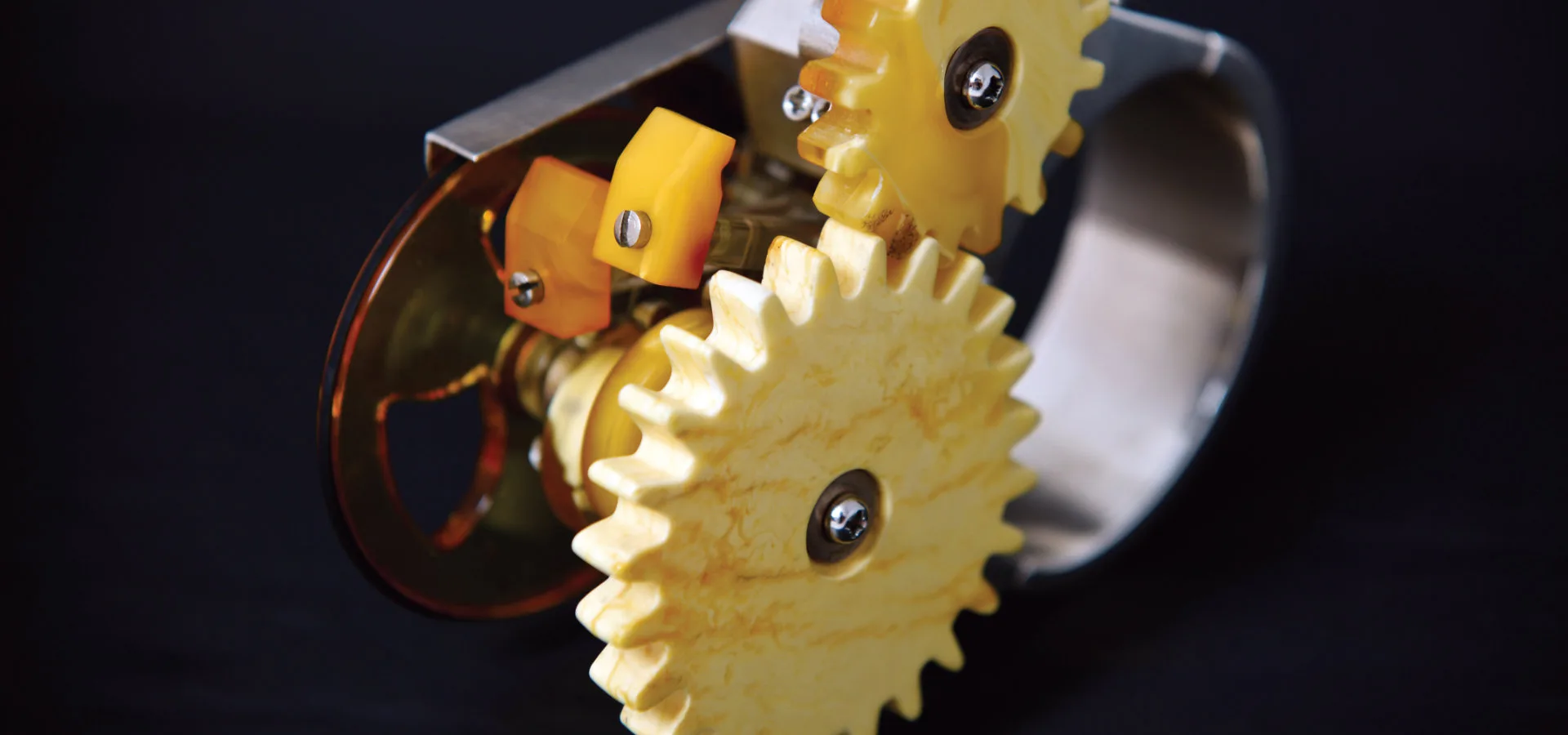
Colombian copal – a unique resin or imitation of Baltic amber?
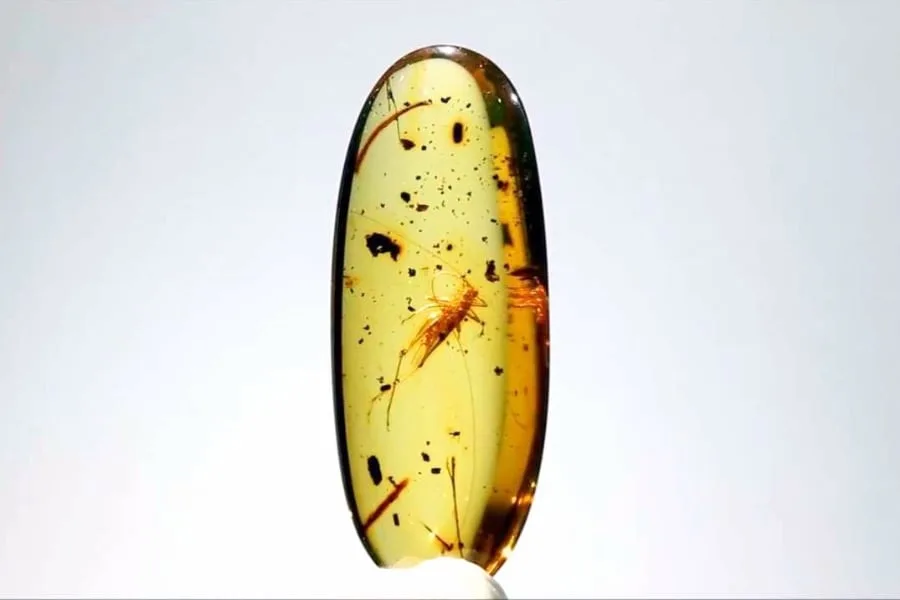
The word copal comes from copalli, which in the Nahuatl language means “incense”. Since the dawn of time this fragrant stone has fascinated people with its resinous scent and unusual appearance. Today it is often compared with Baltic amber because they look alike, despite their different properties. Is there more that divides these resins, or do they have more in common than it seems?
Natural resins are divided by age into older fossil resins (e.g. Baltic amber) and younger ones called subfossil (e.g. Colombian copal). Copals are between 10 000 and 1 million years old, and according to some researchers up to 5 million years [1].
The exact name of the copal usually comes from the place of extraction or from the name of its parent tree. The most popular copal is resin from Colombia, which is characterized by a yellow-greenish colour and high transparency. Its native tree are tropical deciduous trees Leguminosae (similar in appearance to modern acacia).
Resin from Colombia is collected from the Earth’s surface or extracted at small depths. The largest deposits are located in the Andes in the departments of Boyaca and Santander.
Colombian copal is successfully used in jewellery and sculpture. Because it is brittle, however, it is heat-treated in an autoclave to increase its hardness (which makes polishing possible) and to age the colour of the resin. Its surface is also sometimes varnished to make it more resistant to mechanical damage and to give it a better shine [3].
Baltic amber is sometimes replaced with copal from Colombia. There is nothing wrong with it until the person concerned is aware of it. The Colombian copal has the unfair opinion of being an imitation of amber, although it is a valuable and unique stone in itself. Both of these resins are of natural origin and emit a beautiful resinous smell when heated.
What distinguishes Colombian copal from Baltic Amber?
- Age - the copal is up to 5 million years old, and Baltic amber about 40 million;
- Stem tree - resin from Colombia comes from deciduous trees, and Baltic amber from conifers
- Plasticizing and melting temperature - much lower in the case of Colombian copal;
- Hardness - the "Baltic" is much harder, it does not need curing in an autoclave to be used in jewellery;
- Reaction to acetone - copal is covered with a sticky layer, Baltic amber does not react;
- Succinic acid - in copal 0-3%, in Baltic amber from 3-8%.
In our Amber Laboratory, we use infrared spectroscopy (FTIR) to distinguish different resins from each other so that the buyer can be sure of what he is purchasing.


FTiR spectra of Baltic amber and Colombian copal
Sources:
- Kosmowska-Ceranowicz, B., 2012. Amber in Poland and in the world. first edition edited by Warsaw: University of Warsaw Publishing House.
- Kosmowska-Ceranowicz, B., 2001a. Amber and other fossil resins of the world. Artificial copals and resins - imitations or counterfeits of amber. Polish Jeweller, Issue 1 (12), pp. 24-27.
- Kosmowska-Ceranowicz, B., 2013. Amber and its imitations. Warsaw: Sadyba Publishing House.
Author: Karolina Drąg