Facts and myths – amber, or what?
Amber is a source of many mysteries and curiosities that hide the history of our planet, which is why so many myths and stereotypes surround this fossil. The special interest in it comes not only from its history but also from its unique appearance. For centuries it has fascinated collectors and delighted enthusiasts all over the world.
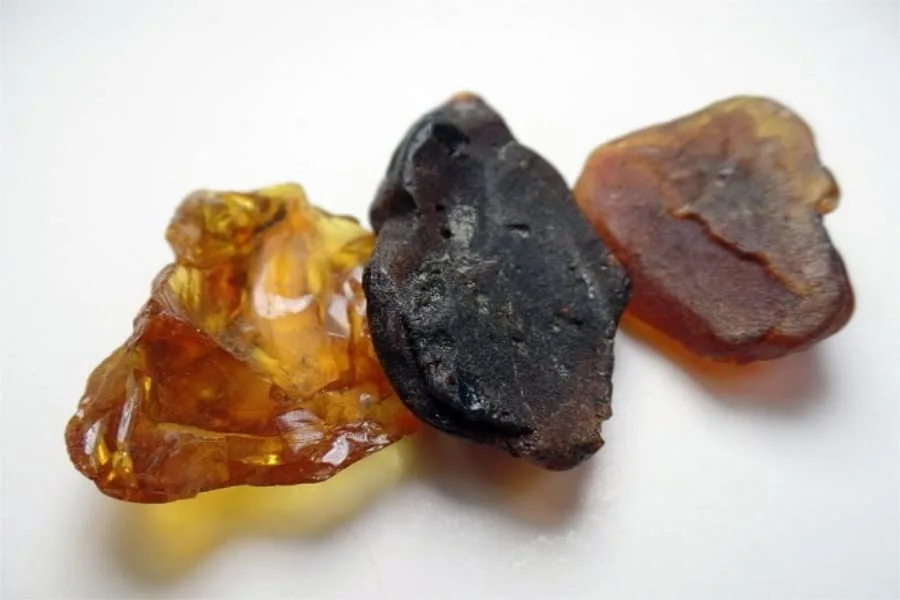
Amber colour – but what colour is that, actually? I often hear: light brown, reddish, orange. The last one, however, may be closer to a tea colour, which corresponds to cognac amber. Equally well known is light yellow, a sunny colour that sometimes takes on a more yellow-white shade. Then we are dealing with milky amber. Assessing and precisely describing the colours of amber is difficult because the material is so varied. It can be cherry red, green or blue, and have different physical and chemical properties. Among these fossils you can find stones of different transparency, with gas bubbles of different diameters, or weathered to different degrees. Whether shaped naturally or expressing the modernity and craft of an artist who modified the material, they are something unique and rare.
To discuss the main colour varieties of amber, it should be noted that the most common and popular colour of Baltic amber is the cognac shade. It is a natural colour, which in ancient times was the dominant of this raw material from other minerals. However, it is regularly varied by artists. Today, cognac amber is often embellished with characteristic “scales”, they are obtained in an autoclave during the heating process in the presence of gas, followed by rapid cooling, as a result of which the scales break up and scales appear.
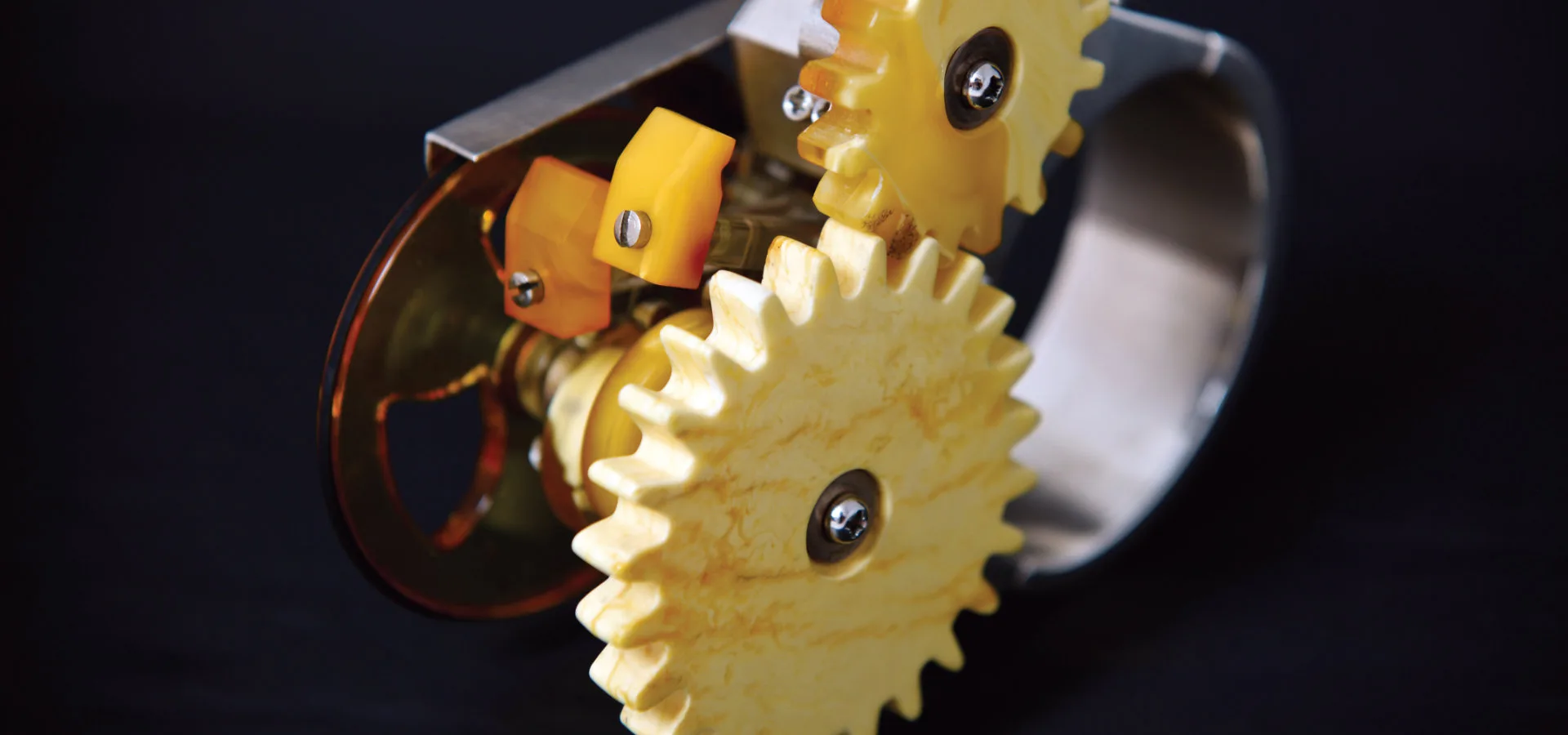
Milky is a similarly natural shade. It occurs in practically the whole range of tones, from white to yellow. The colour results from differences in the internal structure of the fossil. Broadly speaking, amber can be transparent or opaque, depending on the presence and number of gas bubbles. The transparent form has a structure without bubbles. Examples include the so-called “cacko”, honey amber, or amber with a “cloud”. Opaque varieties, on the other hand, have gas bubbles in their structure. Those with more bubbles, about 900,000 bubbles per 1 mm2 of amber, are white. The internal structure of such a stone becomes foam-like, creating a natural milky colour that is still fairly clear and not hazy. With 25,000 bubbles per 1 mm2 opaque yellow amber forms.
Green is an unusual and unusual colour of amber. Amber, both natural and man-made, can appear in this colour. The natural green shade is the result of mineral detectors contaminating the plant with minerals, called natural amber. There are numerous gas bubbles formed during putrefaction of plants, and the colour is earthy-greenish. This “nice” green colour is the result of an autoclave modification or redecoration from below with black paint.
Red, cherry or black ambers are not natural but modified colours. They are obtained in an autoclave under the influence of high temperature and pressure in the presence of inhibitors. The exact process of obtaining them is unknown, because they are the secrets of technological processes.
Customers often ask about blue amber. But does such amber exist? There is no such blue Baltic amber. It can only have a blue glow – these are pyrite crystals breaking through the surface. However, blue amber appears on the market – but it can be, for example: Dominican amber mined on the island of Haiti. It is interesting that, despite the unusualness of its colour, this amber is completely natural. However, mining difficulties make it less available and therefore more attractive and desirable on the precious stones market.
We cordially invite you to our galleries of Boruni and the Amber Museum in Krakow, where specialists will present you a collection of outstanding European amber makers, presenting the palette of amber colours!